
Our Blog
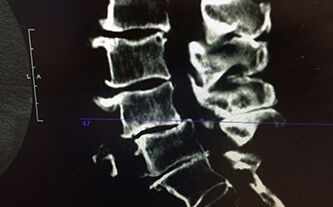
A Review of Conservative Options in the Treatment and Management of Lumbar Spinal Stenosis
What’s the Best Way to Manage Back Pain?
Low back pain can be a serious impairment on normal daily function and has become one of the most common reasons that patients visit a physician, (Stuber, Sajko, & Kristmanson, 2009). While there are various direct and idiopathic causes for low back pain and dysfunction, this examination will focus on Lumbar Spinal Stenosis (LSS).
Lumbar Spinal Stenosis is a condition frequently requiring surgery to alleviate low back pain and/or lower extremity dysfunction. While patients may ultimately require surgical intervention, it is widely held that conservative non-surgical treatment should be the first line of defense for LSS. The challenge facing clinicians is that evidence is currently lacking in the selection criteria for patients who would benefit from conservative case management and the most effective conservative care strategies.
The purpose of this analysis will be to evaluate the current literature regarding conservative diagnosis and management for this condition and to begin to formulate evidence-based treatment options for patients seeking a conservative trial of care before considering surgical intervention. The clinical implications of the research reviewed supports the trend towards conservative care in patients with neurogenic claudication due to lumbar spinal stenosis. While spinal stenosis has historically been viewed as a condition requiring surgical intervention, the evidence presented in this body of research should assist physicians in determining the appropriateness of a conservative trial of care using an evidence-based medicine approach to treatment.
Is Surgery Always Necessary?
Rather than make an immediate surgical referral, clinicians dealing with lower risk patients who demonstrate the symptoms of mild stenosis should design and implement a conservative care approach focused on relieving symptoms, restoring function, and improving stability in the patient. Evidence supports this approach and the majority of mild to moderate patients may respond well to conservative care. Specifically, a conservative plan of treatment could utilize flexion exercise strategies, NSAIDs and other analgesics, passive modalities, manipulation of the affected areas, core strengthening for stability, and postural alterations with modifications to daily activities as a customizable first line of defense. For patients requiring more assistance, steroidal dose packs, and even epidural injections may be utilized to prevent the necessity of surgical intervention.
By exhausting these strategies first, the clinician can avoid surgery for many patients and provide some relief and stabilization to even those patients who ultimately undergo surgery. Since failed low back surgery can be difficult for patients to recover from, a strategy that covers all conservative options from least invasive to most should be evaluated before any surgical intervention is implemented.
In conclusion, low back pain is likely to remain a common occurrence in the typical patient population. Spinal stenosis with corresponding neurogenic claudication is a condition that primary care physicians should be aware of and understand the available treatment strategies. The ice, pain reliever, and muscle relaxant approach that is at times utilized with idiopathic low back pain should be altered and customized for patients presenting with symptoms consistent with stenosis.
References:
Creighton, D., Krauss, J., Marcoux, B. (2006). Management of lumbar spinal stenosis through the use of translatoric manipulation and lumbar flexion exercises: A case series. The Journal of Manual & Manipulative Therapy, Vol. 14 No. 1 (2006), E1 – E10. Retrieved hard copy.
Kalichman, L., & Hunter, D. (2008). Diagnosis and conservative management of degenerative lumbar spondylolisthesis. European Spine Journal, 17(3), 327-335. doi:10.1007/s00586-007-0543-3
Lyle, M., Manes, S., McGuinness, M., Ziaei, S., & Iversen, M. (2005). Relationship of physical examination findings and self-reported symptom severity and physical function in patients with degenerative lumbar conditions. Physical Therapy, 85(2), 120-133. Retrieved from http://ptjournal.apta.org/archive/
Murphy, D., Hurwitz, E., Gregory, A., & Clary, R. (2006). A non-surgical approach to the management of lumbar spinal stenosis: A prospective observational cohort study. BMC Musculoskeletal Disorders, 716-8. doi:10.1186/1471-2474-7-16
Reiman, M., Harris, J., & Cleland, J. (2009). Manual therapy interventions for patients with lumbar spinal stenosis: a systematic review. New Zealand Journal of Physiotherapy, 37(1), 17-28. Retrieved from http://physiotherapy.org.nz/Category?Action=View&Category_id=241
Sahin, F., Yilmaz, F., Kotevoglu, N., & Kuran, B. (2009). The efficacy of physical therapy and physical therapy plus calcitonin in the treatment of lumbar spinal stenosis. Yonsei Medical Journal, 50(5), 683-688. doi:10.3349/ymj.2009.50.5.683
Stuber, K., Sajko, D., & Kristmanson, K. (2009). Chiropractic treatment of lumbar spinal stenosis. Journal of Chiropractic Medicine, 8(2), 77-85. doi:10.1016/j.jcm.2009.02.001
Sung, P., & Ham, Y. (2010). Comparing postural strategy changes following adapted versus non-adapted responses in subjects with and without spinal stenosis. Manual Therapy, 15(3), 261-266.
doi:10.1016/j.math.2010.01.004
Takashi, S., Yasuaki, H., Shinichi, K., Shinichi, K., & Shunichi, F. (2008). Predictive value of self-reported patient information for the identification of lumbar spinal stenosis. Family Practice, 25(4), 237. doi:10.1093/fampra/cmn031
Yuan, P., & Albert, T. (2004). Nonsurgical and surgical management of lumbar spinal stenosis. Journal of Bone & Joint Surgery, American Volume, 86A(10), 2320-2330. Retrieved from http://www.ejbjs.org/cgi/reprint/86/10/2319